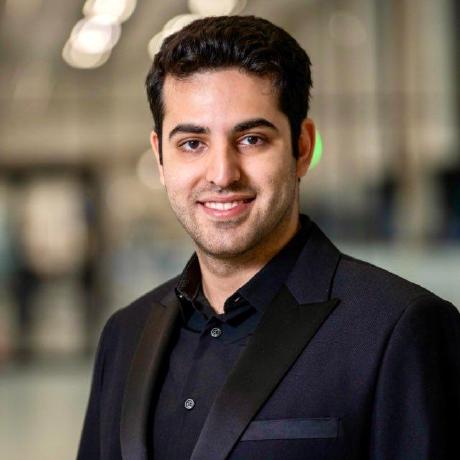
PhD Researcher · WMG, University of Warwick

Researching the foundations of Safe AI for autonomous systems.

I build rigorous ways to evaluate whether intelligent systems can be trusted in the real world — with a focus on synthetic data fidelity and dependable model behaviour for autonomous systems.

  • Developing interpretable evaluation methods for simulation-to-real transfer.
  • Connecting safety assurance with practical validation workflows.
  • Working across autonomous systems, computer vision, and high-stakes AI applications.
3 Selected publications
3 Core research domains
1 Open-source framework

01

About

A concise overview of the research direction, strengths, and academic positioning behind the work.

Danial Safaei is a PhD researcher at WMG, University of Warwick, investigating how to make AI systems for autonomous settings more trustworthy, measurable, and deployment-ready.

His work focuses on the parts of modern AI that matter most when systems leave the lab: how systems are tested, how synthetic data should be evaluated before it is trusted, and how safety claims can be made with greater rigor.

That agenda has led to contributions spanning smart environments, biomedical AI, and autonomous-system validation, but the common thread is consistent: building methods that are technically grounded, explainable, and useful in safety-critical practice.

What defines the work

  • Methodological rigor over visual novelty or hype.
  • Research questions tied to real deployment constraints.
  • Clear bridges between theory, evaluation, and practical safety evidence.

02

Research journey

A progression from applied machine learning toward formal, high-stakes validation for autonomous intelligence.

  1. 2023

    Personalised smart-home intelligence

    Published DeePLT, a deep-learning approach for trajectory-driven adaptive lighting in smart homes, establishing an early track record in human-centred intelligent systems.

  2. 2024

    Graph learning in biomedical AI

    Applied GraphSAGE to discover drug synergy in lung adenocarcinoma, showing how graph-based AI methods can transfer into high-stakes scientific and clinical domains.

  3. 2025

    Decisive Feature Fidelity (DFF)

    Introduced an interpretable framework for judging whether synthetic imagery preserves the features that genuinely drive model decisions — a key step for trustworthy simulation-based validation.

  4. Now

    Safe AI for autonomous systems

    Ongoing work continues within Safe AI for autonomous systems, building on the evaluation and fidelity methods developed above.

03

Research focus

Connected areas of interest across trustworthy AI and autonomous systems.

Primary

Safe AI for autonomous systems

Designing frameworks that improve how safety, reliability, and assurance are argued when AI systems operate in high-consequence environments.

Testing

Scenario-based testing

Testing autonomous systems against the conditions that matter most for safety and reliability.

Validation

Synthetic data fidelity

Measuring whether synthetic data is not merely realistic in appearance, but faithful to the underlying decision-relevant structure seen in real data.

04

Selected publications

Representative outputs across safe AI, computer vision, and graph-based learning.

2023 Springer Smart Environments

DeePLT: Personalized Lighting Facilitated by Trajectory Prediction of Recognized Residents in Smart Home

A deep-learning framework for adaptive smart-home lighting informed by resident trajectory prediction, published in the International Journal of Information Technology.

2024 medRxiv Biomedical AI

GraphSAGE Discovers Synergistic Combinations of Gefitinib, Paclitaxel, and Icotinib for Lung Adenocarcinoma Management

Uses graph neural networks to identify drug synergy in lung adenocarcinoma, demonstrating methodology transfer to clinically significant biomedical problems.

05

Open research code

Code that supports reproducibility, transparency, and practical access to the research.

Featured repository

Decisive Feature Fidelity (DFF)

Reference implementation for the DFF framework, supporting transparent evaluation of fidelity between synthetic and real imagery.

Website source

danial-safaei.github.io

This site is intentionally lightweight: a static portfolio built with plain HTML, CSS, and JavaScript for fast loading and easy maintenance.

Full catalogue

All public repositories

Browse the wider body of public work, experiments, and supporting research artefacts on GitHub.

06

Contact

For research collaboration, speaking opportunities, or technically serious conversations about Safe AI and autonomous-system validation.

If you are working on trustworthy AI, simulation-to-real transfer, validation methodology, or evidence for autonomous-system safety, I would be glad to connect.